


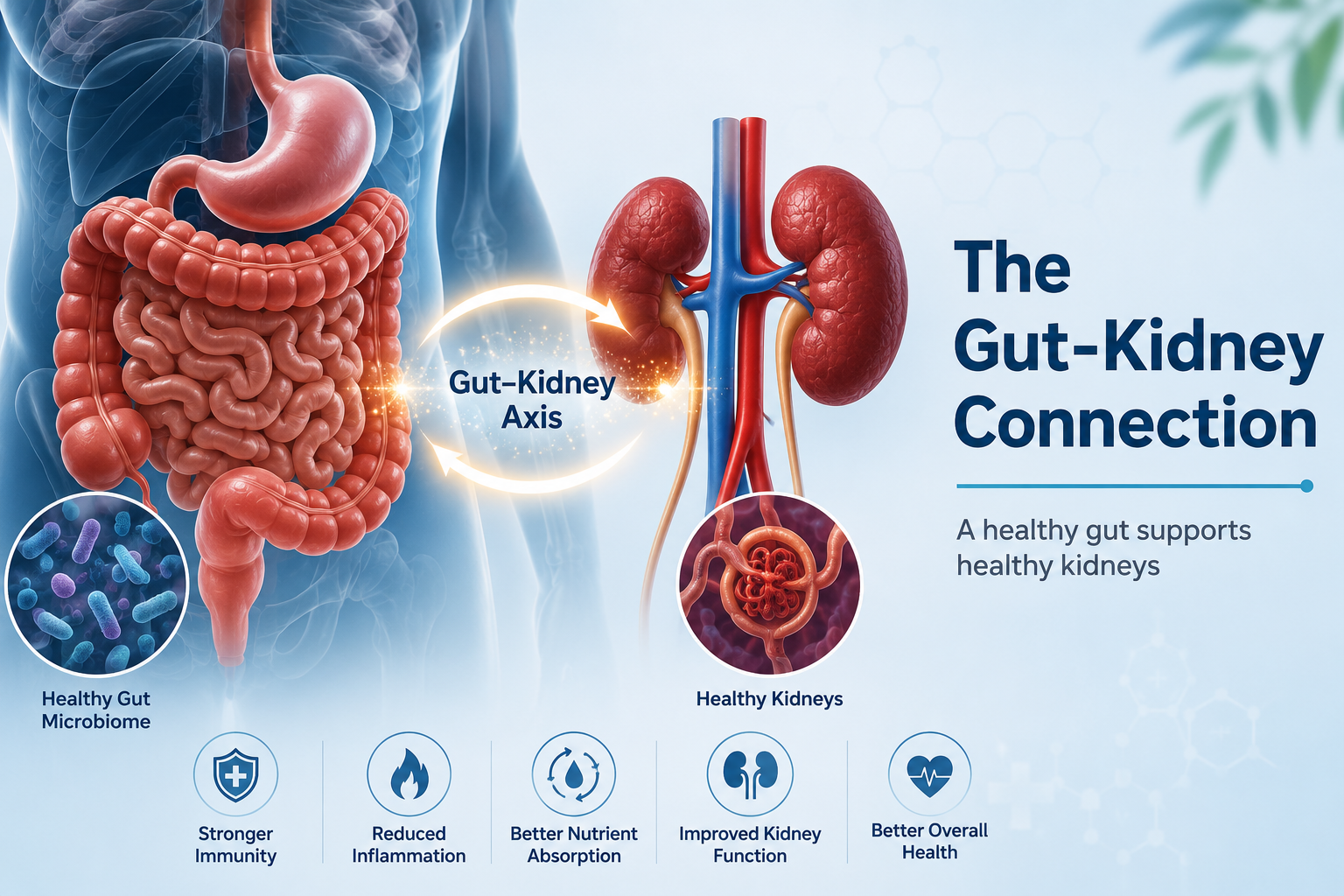

In the discussion on kidney health, hydration, blood pressure, and low sodium intake come to mind. You do not consider your digestive system. However, an ongoing silent dialogue is taking place between your digestive tract and renal system.It is referred to as the gut-kidney axis.New medical discoveries show that the trillions of bacteria inside your intestines serve as a backup control system for your kidneys. In case this ecosystem is thriving, your kidneys remain healthy. Otherwise, your gut becomes a production plant for accelerating kidney dysfunction. You must visit the best urology doctor in Patna.
The Secret Alliance: The Gut-Kidney Connection
The gut and the kidneys form the most advanced filtering pair in the body. Under normal conditions, they coordinate in order to filter waste, regulate fluid balance, and reduce inflammation. When kidneys start malfunctioning even a little bit, a chain reaction that is detrimental to health takes place. With the kidneys failing to do their job of filtering the blood, there is an accumulation of metabolic waste products such as urea.
In your intestines, destructive bacteria convert this urea into ammonia. This leads to an abnormal increase in acidity levels in your body, changing your digestive system’s acidic nature into an alkaline one. The consequences are dire for your microbiome:
- Mass Death: Good bacteria that digest fiber are killed.
- Bacteria Invasion: Harmful bacteria that digest proteins grow at a very fast pace.
- “Leaky Gut” Syndrome: The rise in the level of alkalinity causes the cells that make up your intestines to become loose.Thereafter, toxins, waste products, and bacteria find their way into your bloodstream.
The Microbe Factory: Meet the Uremic Toxins
Not only does an unbalanced gut allow toxic substances to pass through; it actively produces them. As the pathogenic gut flora feeds on dietary proteins, they generate metabolic products which the liver then transforms into uremic toxins.
Three uremic toxins promote the development of CKD:
- Indoxyl Sulfate (IS): Produced during the metabolism of tryptophan (richly present in red meat), this toxin leads to the generation of oxidative stress which results in the formation of kidney fibrosis.
- p-Cresyl Sulfate (pCS): This product causes the destruction of renal tubules, thus increasing the loss of eGFR.
- TMAO (Trimethylamine N-oxide): This substance is highly associated with both heart failure and quick decline of kidneys.
These substances, however, are not easily filtered out by compromised kidneys, leading to their accumulation in the body. This leads to a vicious cycle where declining kidneys harm the digestive system and the harmful substances produced by the latter harm the kidneys further.
“Probiotics as Virtual Kidneys”
It is at this point that probiotics come into play. Rather than treating renal disease only as an inevitable genetic or structural problem, contemporary nephrology is using certain strains of live bacteria, including Lactobacillus and Bifidobacterium, as active protection. Probiotics work by protecting the kidney using the following three methods:
- Enteric Dialysis (Waste Removal): There are some special probiotic bacteria that regard the digestive tract as an auxiliary system for filtering. Urea, uric acid, and creatinine are consumed by the bacteria, using these substances as food. The result is that these wastes are consumed within the colon and do not reach the blood stream, thus becoming a type of natural “enteric dialysis.”
- Starving the Toxins: By filling your digestive system with good bacteria, you can create tough competition for the toxins. Good bacteria will push the bad bacteria out, stopping the creation of toxins.
- Fixing the Leaky Gut: The good bacteria that ferment fiber will give rise to Short Chain Fatty Acids (SCFA), especially butyrate. The SCFA serves as the energy source of your intestinal lining, thus helping it to mend its leakiness. When your gut is fixed, it becomes capable of retaining the toxins within it, where they can be safely excreted in the stool.
Feeding Your Gut-Kidney Protector
For advanced-stage kidney management where you have to watch out for your potassium and phosphorus, optimization of the gut-kidney axis requires a fine balance.
- Cherry-Pick the Appropriate Fiber: Fiber provides the energy required by your good microbes to produce SCFAs. When you have a limited diet plan, include low-potassium, healthy fiber sources such as berries, apples, cabbage, and carrots.
- Include Synbiotics as Required: Consult your nephrologist about using “synbiotics” supplements that contain specific strains of probiotics along with the prebiotics that feed them.
- Redefine Protein Intake: Red meat is an excellent source of feeding the bacteria responsible for producing uremic toxins. Change part of your protein intake from red meats to vegetarian proteins such as tofu or limited amounts of kidney-friendly legumes.
The Bottom Line
Your kidneys do not operate in a bubble. The gut is where the remote control for systemic inflammation and toxin production exists. By feeding your microbiome to promote health in your gut, you can turn off the harmful feedback cycle of kidney deterioration and keep your kidneys safe from the inside. You should discuss your issue further with the best nephrologist in Patna and get the best treatment on time.